
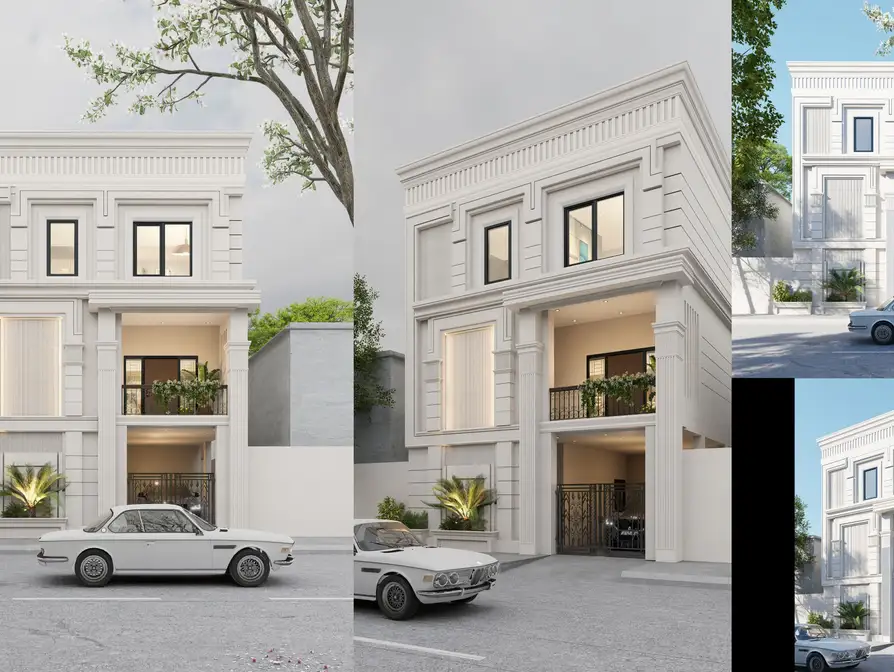
You might have caught yourself wondering—or even saying out loud—the dreaded phrase: “Can’t you just press render?” It sounds incredibly simple, right? You just load up the model, click a big, shiny button, and go grab a coffee while the machine spits out a photorealistic masterpiece.
Let’s clear the air right now: that magic button does not exist. The world of architectural visualization is surrounded by misconceptions, so let’s bust the biggest myths about how these stunning images are actually brought to life.
Myth #1: The Computer Does All the Work
In reality, a piece of 3D software is just a very complicated, very blank canvas. Before the rendering engine even starts calculating pixels, an artist has to act as a virtual interior designer, landscape architect, and professional photographer all rolled into one. We spend hours meticulously tweaking the micro-scratches on a hardwood floor, adjusting the exact atmospheric density to get a soft morning haze, and placing virtual cameras to capture an emotionally resonant composition. The computer only calculates what the artist painstakingly builds.
Myth #2: AI is a Magic, One-Click Solution
Lately, there’s a new myth dominating the conversation: AI is now doing all the heavy lifting. Don’t get me wrong, the technology is revolutionary. Integrating advanced tools like ComfyUI, ControlNet, or Leonardo AI into the workflow is an absolute game-changer for refining details and iterating on ideas. But these sophisticated systems don’t just read a simple text prompt and instantly generate a flawless, dimensionally accurate building out of thin air. They require precise architectural input, complex node-based setups, and expert human guidance. It’s a highly technical collaboration between human creativity and machine processing, not a mindless shortcut. Also, doing revisions perfectly in AI is technically impossible, time consuming and error prone.
Myth #3: It’s Just “Coloring In” a Blueprint
Another common misconception is that visualization is simply applying standard textures to an architect’s CAD file. At ArchCGI, we know firsthand that raw geometric models are often cold and lifeless. Turning those sterile digital walls into a vibrant space you actually want to inhabit requires injecting the “human element.” That means strategically draping a textured throw blanket, adding realistic weathering to exterior concrete, and perfectly styling the lighting so the space feels lived-in and inviting rather than like a sterile laboratory.
The Reality Behind the Screen
Architectural visualization is a demanding, exhilarating blend of artistic vision and hardcore technical problem-solving. It’s never quite as simple as pressing a single button, but the intense, detail-obsessed journey behind the scenes is exactly what makes the final, glowing image so incredibly captivating.
Have you ever underestimated the sheer amount of work that goes into digital art or 3D rendering? Drop a comment below with your thoughts! If you found this peek behind the curtain insightful, share this post with your network, and be sure to check back soon for more deep dives into the world of design and visualization.