
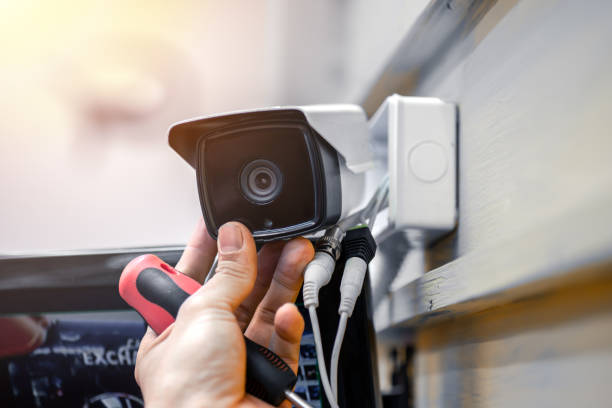
A commercial surveillance system is only as effective as the way its cameras are positioned. Businesses can invest in high-resolution cameras, advanced recording equipment, remote monitoring, and intelligent analytics, but poor placement can still leave important areas unprotected.
Effective camera placement requires more than mounting devices in visible corners. Businesses need to identify how people and vehicles move through the property, where valuable assets are located, which areas present greater security risks, and what type of evidence may be needed if an incident occurs.
A carefully planned layout can reduce blind spots, improve image quality, and help businesses get more value from every camera installed.
Start With a Security Assessment
Before selecting camera locations, walk through the property and identify areas where security incidents are most likely to occur.
Think about how customers, employees, vendors, and delivery personnel enter and move through the building. Consider where valuable inventory is stored, where transactions occur, and which areas are difficult for employees to observe naturally.
Exterior vulnerabilities should also be included.
Parking areas, loading docks, rear entrances, gates, equipment yards, and isolated sections of the property may require additional attention.
The goal is to understand risk before deciding where cameras belong.
Prioritize Main Entrances and Exits
Entrances and exits are among the most important locations for commercial cameras because nearly everyone entering the property passes through them.
A camera should provide a useful view of people approaching and moving through the doorway.
Mounting a camera too high may provide an excellent view of the top of someone’s head while producing limited identifying detail. Position and angle should therefore be selected carefully.
Lighting also matters.
Glass doors and bright exterior sunlight can create significant contrast between indoor and outdoor areas. Cameras designed to handle challenging lighting conditions can help maintain more usable footage throughout the day.
Secondary employee and service entrances should not be overlooked simply because they receive less traffic.
Monitor Reception and Lobby Areas
Reception areas often act as the first point of contact between visitors and a business.
A properly positioned camera can provide an overview of who enters, who approaches the reception desk, and how visitors move into other parts of the facility.
The objective is generally to capture useful activity without unnecessarily monitoring private workspaces.
For larger commercial buildings, lobby cameras may work alongside access control systems to provide additional context when visitors or employees enter controlled areas.
Protect Transaction and High-Value Areas
Retail stores, service businesses, and other organizations handling payments may benefit from surveillance around transaction points.
Camera placement should provide enough context to understand what happens during an incident without interfering with normal operations.
Areas containing high-value merchandise, specialized equipment, records, or inventory may also require dedicated coverage.
Businesses evaluating Commercial CCTV Systems Phoenix should consider these operational risks during system design instead of relying on a standard camera layout that may not reflect the way their property is actually used.
Every camera should have a defined purpose.
Give Parking Areas Adequate Coverage
Parking areas can be challenging because they often cover large spaces.
Trying to monitor an entire parking lot with one camera may provide a general overview but insufficient detail when an incident occurs.
A better strategy may involve combining wide-area coverage with cameras focused on important locations such as vehicle entrances, pedestrian pathways, building entrances, or areas containing business vehicles.
Lighting conditions should be evaluated during both daytime and nighttime hours.
Headlights, bright parking lot fixtures, deep shadows, and changing sunlight can all affect image quality.
Businesses should test whether cameras provide usable footage under the conditions in which incidents are most likely to occur.
Do Not Ignore Loading Docks
Loading areas deserve special consideration because they often involve valuable inventory, frequent vehicle movement, and people entering outside standard customer areas.
Cameras can provide oversight of delivery activity, loading procedures, and vehicles approaching or leaving the property.
Warehouses may also need cameras covering the transition between loading docks and interior storage areas.
This creates a clearer visual record of how merchandise moves through the facility.
For businesses operating during early morning or overnight hours, low-light performance becomes particularly important around these locations.
Cover Hallways and Major Traffic Routes
Long hallways and connecting corridors can provide useful opportunities for surveillance because people moving between departments often pass through them.
Rather than attempting to place cameras in every room, businesses may be able to monitor major routes between important areas.
This can help establish movement during an investigation.
For example, if an incident occurs in a storage room, hallway footage may help determine who entered or left the surrounding area during the relevant period.
Camera placement should still respect areas where privacy is expected.
Protect Restricted Areas
Server rooms, inventory storage spaces, electrical rooms, records areas, and other restricted locations may require additional protection.
Cameras near these spaces can work particularly well when combined with access control.
An access control system may record that a credential was presented, while surveillance footage provides visual context surrounding the event.
This becomes especially useful when investigating denied access attempts, after-hours entry, or unusual activity around sensitive areas.
The camera should generally focus on the approach to the controlled area rather than unnecessarily monitoring activities that do not relate to security.
Use Corners Strategically
Corners can provide useful camera positions because they often allow wider views with fewer obstructions.
However, automatically installing a camera in every corner is not a complete strategy.
Shelving, displays, machinery, walls, signs, and other structures can block important sections of the image.
A camera may appear to cover a large room on a floor plan while actually losing visibility behind tall equipment.
Before final installation, businesses should evaluate the real line of sight from each proposed location.
Avoid Mounting Every Camera Too High
Higher camera placement can protect equipment from tampering and provide wider coverage, but higher is not always better.
If identifying detail is important, excessive height can produce poor viewing angles.
The ideal mounting position depends on what the camera is expected to accomplish.
A camera providing general warehouse awareness may be positioned differently from one monitoring a controlled doorway.
Camera height, lens selection, resolution, and field of view should work together.
Eliminate Overlapping Blind Spots
Some overlap between cameras can be useful.
If one camera covers the end of another camera’s field of view, it becomes more difficult for someone to move through the property without appearing on video.
However, excessive overlap can waste equipment.
The goal is to create complementary coverage where cameras support one another while still monitoring distinct areas.
A professional system design should identify likely blind spots before installation rather than discovering them after an incident.
Consider Nighttime Conditions
Camera placement should be tested after dark.
A location that provides excellent footage during business hours may behave differently when natural light disappears.
Bright exterior fixtures can create glare. Infrared illumination can reflect from nearby walls, ceilings, or glass. Vehicle headlights may temporarily affect exposure.
Outdoor cameras should also be selected for the environmental conditions where they will operate.
Phoenix businesses, in particular, should consider prolonged exposure to heat, sunlight, dust, and outdoor conditions when choosing equipment and installation locations.
Think About Analytics During Placement
Modern security cameras may support features such as person detection, vehicle detection, line crossing, intrusion zones, and other analytics.
Placement can influence how accurately these features perform.
A camera intended to detect people entering a restricted area should have a clear view of that zone without unnecessary interference from public sidewalks, moving trees, or nearby vehicle traffic.
Proper positioning can reduce false alerts and make analytics more useful.
The camera should be installed around the security objective rather than expecting software to compensate for an unsuitable view.
Review the Property After Installation
Camera placement should be verified once the complete system is operating.
Walk through realistic scenarios.
Approach entrances, move through parking areas, enter loading zones, and walk through important interior routes. Review the footage afterward and determine whether the cameras capture the information the business actually needs.
Test during different lighting conditions as well.
If important details are missing, adjustments may involve changing camera angles, relocating equipment, modifying lighting, or selecting a different lens.
Build Coverage Around Real Business Risks
Maximum coverage does not necessarily mean installing the maximum number of cameras.
An effective commercial surveillance design focuses on strategic visibility.
Entrances, exits, transaction areas, parking facilities, loading zones, restricted rooms, major corridors, and high-value assets should receive priority based on the individual property.
Every camera should answer a specific security question.
What area is this camera protecting? What activity should it capture? What information would the business need from this footage if an incident occurred?
When those questions guide the design process, businesses can reduce blind spots while avoiding unnecessary equipment.
A well-planned surveillance system creates overlapping layers of visibility around the areas that matter most. Combined with appropriate lighting, reliable recording, intelligent analytics, and proper maintenance, strategic camera placement can turn individual devices into a coordinated security system capable of providing meaningful coverage throughout the property.